Every object becomes
its own proof of origin
One verifiable identity for every physical object, trusted by supply chains, markets and machines. Tachyon reads the inherent physical features of an object, at the surface and beneath it, and turns them into a fingerprint no label, tag or certificate can match.

Authenticity lies beneath — now we can prove it.

Authenticity lies beneath — now we can prove it.
Business Benefits
Stop counterfeit and fraudulent goods
Identify substitutes and fakes at the point of inspection, not after the loss.
One universal system to identify physical goods
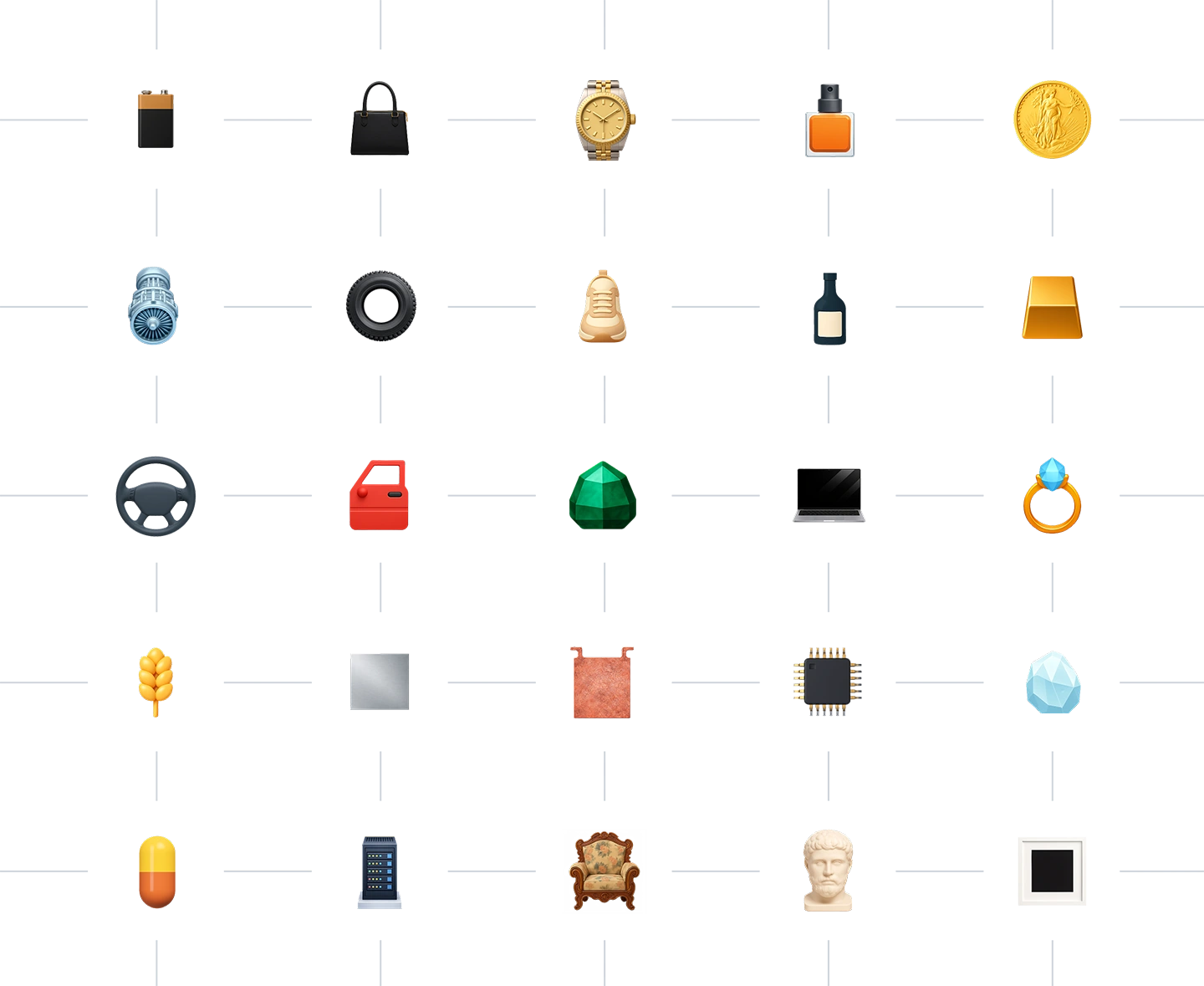
The same approach works across diamonds, metals, artworks and manufactured products.
End-to-end supply chain tracking
Follow each object from origin to resale, without attaching anything to it.
CORE FEATURES
What makes Tachyon unique?

Non-invasive: nothing touches the object
Tachyon's technology does not harm, alter, drill into or chemically sample the object. It uses non-envasive scanning only: high-resolution optical, spectral and 3D surface mapping.
Self-provenance: the object is its own record
Traditional authentication relies on a paper trail of owners, receipts and archives. With self-provenance, the object's microscopic surface pattern and internal structural and material composition act as a permanent fingerprint that cannot be copied, even after the object is modified.
Object authentication: proof, not paperwork
Tachyon irrefutably proves that an object is the genuine original, not a fake, substitute or counterfeit.
Where Tachyon creates measurable value
Traditional identifiers such as serial numbers, QR codes and RFID tags can be copied, tampered with or detached. Tachyon links each object to its digital twin at a microscopic level, so the link holds wherever the object goes.
Anti-counterfeiting and provenance tracking
Modifications are recorded, not lost. When an object changes (a watch gets aftermarket parts, a car gets a new engine), Tachyon updates its digital twin instead of breaking the link.
Automated authentication. Customs, marketplaces and buyers can verify authenticity in a scan, without depending on a single expert's opinion.
Fractional ownership and decentralised finance
To bring high-value physical assets into decentralised finance, investors and protocols need certainty about the collateral.
Item-level collateral. Art, rare commodities and specialised machinery can be tokenised and used as loan collateral. Because the object is identifiable even after alteration, the risk of collateral being swapped for a fake falls sharply.
True fractional equity. Investors can own a share of a specific item (a historic batch of wine, a particular vehicle in a fleet) and know exactly which physical object they hold, rather than a share of a vague pool.
Circular economy and secondary markets
For mass-produced goods, the journey does not end at the first sale.
Proof of usage and maintenance. Later buyers can trace repair history, mileage and usage tied to that exact object, which supports a fair resale price.
Buy-back and recycling programms. Brands can confirm a returned item is the original before paying recycling incentives or arranging responsible disposal.
Physical AI and autonomous systems
Robots and other physical AI systems struggle to move from simulation to the real world, where objects wear and drift. A persistent identity for each object helps close that gap.
Learning from real-world wear. Linking each object to its digital twin lets robots track wear, drift and history over time, reducing tracking errors when several machines handle the same items and improving models trained in simulation.
Machine-to-machine trust. Autonomous agents can check an object's identity against a contract before acting, enabling automated parts procurement and transactions between machines.
See Tachyon prove authenticity in your world.